
Introduction
Finding the right word can sometimes be difficult, especially when a puzzle provides only a few letters or a specific word length. This is where 5 letter words WordHippo searches can be useful. Five-letter words are particularly popular because many word games, including Wordle-style puzzles, use five-letter answers. Players may know the first letter, last letter, a few letters in the middle, or several letters that cannot be used. Instead of checking a large dictionary manually, a word finder can help narrow the possibilities. WordHippo provides word-search and language tools that can be used to explore words according to length, letters, patterns, and other conditions.
The usefulness of 5 letter words WordHippo searches extends beyond games. Students can use five-letter words for vocabulary practice, writers can explore alternative words, and puzzle enthusiasts can search for possible answers to clues. The key is understanding how to use the available filters correctly. A search becomes much more helpful when known letters, excluded letters, starting patterns, and ending patterns are entered accurately. This article explains how five-letter word searches work, how they can support different puzzles, and how to make searches more efficient.
What Are 5 Letter Words WordHippo Searches?
The phrase 5 letter words WordHippo generally refers to using WordHippo’s word-search features to locate words containing exactly five letters. Rather than representing a separate dictionary, the phrase describes a common way people search for five-letter vocabulary through WordHippo. The service includes tools for finding words based on characteristics such as length, starting letters, ending letters, included letters, and meanings.
For example, someone might need a five-letter word beginning with “ST,” another person might need a word ending in “ER,” while a puzzle player may need a word containing A and R but excluding E and T. These are different search requirements, but they all involve the same basic idea: narrowing a broad vocabulary list according to known information. This makes 5 letter words WordHippo searches especially useful when guessing randomly would produce too many possibilities.
Why Five-Letter Words Are Popular
Five-letter words occupy an interesting position in English vocabulary. They are long enough to provide many combinations while still being short enough to recognize quickly. This makes them suitable for puzzles, classroom exercises, vocabulary games, and word challenges. Wordle popularized the five-letter format for many players, while crossword puzzles and other games have long used short words as clues and answers.
Another reason five-letter words are useful is that they can contain several different letter patterns. Words such as “crane,” “plant,” “house,” “light,” and “stone” contain common letters that are easy to recognize. Less common words can introduce unusual combinations and help players expand their vocabulary. A 5 letter words WordHippo search therefore can serve both an immediate puzzle-solving purpose and a longer-term vocabulary-building purpose.
How to Search for Five-Letter Words
Using 5 letter words WordHippo effectively starts with selecting the correct word length. If you need exactly five letters, setting the length first prevents longer and shorter words from unnecessarily appearing in the results. After that, additional clues can be entered according to what you already know.
For instance, suppose a puzzle tells you that the answer starts with “BR.” Instead of looking through an entire five-letter list, you can search for five-letter words beginning with that combination. Possible examples include “brace,” “brain,” “brave,” “bread,” and “bring.” If you also know that the word ends with “E,” the search can be narrowed further. This method turns a broad word search into a focused process.
Using Starting Letters
Starting letters are among the simplest clues to use in a five-letter word puzzle. If the answer begins with “CA,” possible words include “cabin,” “cable,” “candy,” and “carry.” If the starting pattern is “ST,” words such as “stage,” “stare,” “steam,” and “stone” may become possibilities.
A 5 letter words WordHippo search based on starting letters is particularly useful when a puzzle gives you a confirmed first or first few characters. Rather than manually checking every word, you can concentrate on the smaller group matching the beginning pattern. This can save time and make it easier to compare the remaining letters.
Searching by Ending Letters
The final letters of a word can be just as helpful as the beginning. Suppose you know that a five-letter answer ends in “ER.” Words such as “baker,” “buyer,” “eager,” “later,” and “tiger” may fit the basic pattern. If you know both the first and final letters, the number of possibilities becomes smaller.
For example, a pattern such as “B___E” tells you that B must be first and E must be last. Adding another confirmed letter can narrow the search even further. 5 letter words WordHippo searches become more effective as additional information is supplied because each clue removes words that do not satisfy the conditions.
Finding Words With Specific Letters
Sometimes a puzzle does not tell you exactly where a letter appears. Instead, it tells you that the letter is somewhere in the answer. This is different from knowing an exact position.
For example, if you know that a five-letter word contains A, R, and E, you should search for words containing those letters while allowing their positions to vary. Candidates might include “arise,” “share,” “heart,” or “clear,” depending on the other puzzle conditions.
This type of search is particularly useful when working with games that provide information about letters without immediately confirming their positions. Combining required letters with excluded letters can make the resulting list much smaller.
Using Excluded Letters
Knowing which letters are not present can be extremely valuable. Suppose a puzzle has already shown that B, T, S, and L are incorrect. Removing these letters from the search prevents many irrelevant results from appearing.
A useful strategy is to record excluded letters separately from confirmed letters. Confirmed letters tell you what must be included, while excluded letters tell you what must be removed. Combining both types of information makes a 5 letter words WordHippo search more precise.
This approach is especially helpful during later stages of a word puzzle, when only a handful of possibilities remain. Instead of guessing from a large dictionary, you can focus on candidates that satisfy every known condition.
5 Letter Words WordHippo for Wordle-Style Puzzles
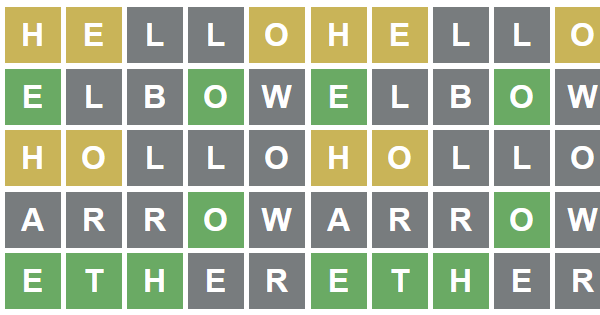
Five-letter word searches are closely associated with Wordle-style games because the answer format commonly contains five letters. In these games, clues usually provide information about whether a letter is correctly positioned, present somewhere else, or absent.
A green letter indicates that the letter is in the correct position. A yellow letter generally indicates that the letter appears in the answer but is positioned incorrectly, while a gray letter indicates that the letter is not used in the answer, subject to the game’s handling of repeated letters.
A 5 letter words WordHippo search can help translate these clues into a manageable list. For example, if the pattern is _ R A _ E, you know that R is second, A is third, and E is fifth. You can then eliminate candidates containing letters that have already been ruled out.
Common Five-Letter Word Examples
Five-letter vocabulary covers many everyday subjects. Some familiar examples include:
- Nature: plant, river, ocean, earth
- Objects: table, chair, phone, clock
- Actions: start, write, speak, drive
- Descriptions: happy, brave, quiet, large
- Places or settings: house, hotel, beach, field
These examples demonstrate why five-letter words are useful for vocabulary games. They include nouns, verbs, adjectives, and other word types. A WordHippo search can help users locate words according to different requirements rather than simply memorizing a fixed list.
Five-Letter Words With Repeated Letters
Repeated letters can make word puzzles more challenging. Words such as “apple,” “berry,” “happy,” “glass,” and “still” contain repeated characters. A player may initially overlook duplicate letters because they are often thinking about unique characters rather than the number of times each character appears.
When using 5 letter words WordHippo searches, repeated letters should be considered carefully. If a puzzle indicates that two copies of a letter are possible, candidates containing duplicate letters should remain in consideration. Conversely, if a repeated letter has been ruled out, those candidates can be removed.
This is one reason it is useful to keep track of every clue rather than relying only on memory. A systematic search reduces the chance of accidentally eliminating a valid word.
Finding Words by Meaning
Not every word puzzle gives you letters. Some provide a definition or clue. In such cases, meaning-based word tools can help generate possible answers.
For example, if the clue describes someone who is courageous, “brave” could be a five-letter possibility. If the clue means extremely angry, “irate” or “livid” may be relevant depending on the exact wording. If the clue refers to a large body of water, “ocean” is one possible five-letter answer.
After finding a candidate through meaning, it is important to check whether it fits the puzzle’s other requirements. A word may match the definition but fail because it has the wrong number of letters or does not match the crossing letters. This makes 5 letter words WordHippo useful as part of a broader solving process rather than as the only step.
Five-Letter Words for Crossword Puzzles
Crossword puzzles often combine definitions with crossing letters. A clue may provide the meaning while intersecting answers provide several fixed positions. For example, if a clue requires a five-letter word and the pattern is _ R A _ E, only candidates matching both the meaning and pattern should remain.
Word-search tools can help generate possibilities, but crossword solving still requires attention to grammar, tense, singular and plural forms, and the precise meaning of the clue. An obscure dictionary entry may technically match the letters but still be inappropriate for the puzzle.
Vocabulary Learning With Five-Letter Words
Five-letter words can also be useful for improving vocabulary. Students can create lists based on themes, beginning letters, word families, or meanings. Learning words in groups makes it easier to recognize spelling patterns.
For example, students might study words beginning with “CH,” including “chair,” “chain,” “charm,” “chase,” and “cheap.” Another exercise could involve finding words ending in “LY,” such as “badly,” “daily,” “early,” and “sadly.”
A 5 letter words WordHippo search can support these activities by helping learners explore possibilities beyond the most familiar vocabulary. When an unfamiliar word appears, its definition and usage should be checked before it is added to a study list.
Tips for Better Word Searches
The best way to use a word finder is to enter information gradually and accurately. Start with the fixed word length, then add confirmed positions, required letters, excluded letters, and known sequences. Avoid entering uncertain information because an incorrect filter can remove the correct answer.
It is also useful to consider whether the puzzle accepts uncommon words. A broad dictionary can contain technical, archaic, regional, or unusual vocabulary that may not be accepted by every game. Search results should therefore be treated as possibilities that still need to be checked against the rules of the specific puzzle or game.
How to Narrow Results Quickly
When many candidates appear, use the strongest clues first. Exact positions are usually more restrictive than simply knowing that a letter appears somewhere. Excluded letters are also powerful because they can eliminate several candidates at once.
For example, imagine you need a five-letter word with A in the third position, E at the end, and R somewhere in the word. You could begin with the pattern __A_E, then require R, and finally remove letters that the puzzle has already rejected. This approach is faster than checking every word individually.
Why Word Verification Matters
Not every word returned by a general word finder will necessarily work in every word game. Different games can use different accepted-word lists and rules. A word may exist in a dictionary but be rejected by a particular game’s vocabulary database.
This is an important consideration when using 5 letter words WordHippo for competitive or rule-based games. Before submitting an unusual candidate, verify that the game accepts it. This is particularly important for uncommon words, technical terms, names, abbreviations, and regional vocabulary.
Conclusion
Five-letter words are useful across Wordle-style games, crosswords, vocabulary exercises, spelling practice, and other word challenges. 5 letter words WordHippo searches provide a practical way to narrow a large collection of words according to length, starting letters, ending letters, required characters, excluded characters, and other clues. The most effective approach is to turn each puzzle clue into a specific search condition and then compare the remaining candidates carefully.
Whether you need a familiar everyday word or are trying to solve a difficult letter pattern, understanding how five-letter word searches work can make the process more organized. WordHippo can be a helpful starting point, but final verification should always follow the rules of the particular puzzle or game. With accurate filters and careful checking, 5 letter words WordHippo searches can make word discovery faster while also introducing you to new vocabulary.

