
Introduction
Five-letter words are extremely useful in word games, crossword puzzles, spelling activities, vocabulary exercises, and everyday language practice. When players know the required word length but cannot immediately remember a suitable word, a word finder can make the search easier. The phrase 5 letter WordHippo is commonly associated with searching for five-letter words and exploring vocabulary based on specific letters, patterns, or meanings.
Five-letter words offer an interesting balance between simplicity and variety. Some are very common, such as “apple,” “house,” “water,” and “world,” while others are less familiar and may be useful in specialized word games. Learning groups of five-letter words can improve spelling, recognition of letter patterns, and vocabulary. Whether someone is solving a daily word puzzle or studying English, understanding how to search for and organize five-letter words can make the process faster and more productive.
What Is a Five-Letter Word?
A five-letter word is simply a word containing exactly five alphabetic characters. Examples include “table,” “green,” “plant,” “river,” and “music.” The first, second, third, fourth, and fifth positions can contain different combinations of letters, creating a very large number of possible words.
Five-letter words are especially popular in word games because the fixed length creates a clear challenge. Players may receive clues about specific letters or positions and must use those clues to identify the correct answer.
A search such as 5 letter WordHippo can be useful when someone wants to explore a large selection of words without manually thinking of every possible combination. Instead of guessing randomly, players can organize their search according to known information.
Why Five-Letter Words Are Important
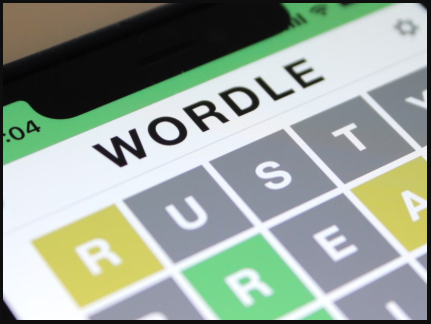
Five-letter words have become particularly important because many popular word puzzles use this format. Players may be given six attempts to identify a hidden five-letter answer, making vocabulary and logical deduction equally important.
These words are also useful for language learners. Studying five-letter vocabulary introduces common spelling patterns while keeping the list manageable. Learners can study the meaning, pronunciation, spelling, and usage of each word.
For writers, five-letter words can also provide alternatives when looking for concise language. A simple word can sometimes communicate an idea more clearly than a longer expression.
How Word-Finding Tools Work
Word-finding tools generally allow users to search for words based on criteria such as length, starting letter, ending letter, included letters, excluded letters, or word pattern. This can significantly reduce the number of possible results.
For example, if a puzzle requires a five-letter word beginning with “S,” the search can focus only on words matching that condition. If the third letter is known to be “A,” the search can become even more specific.
This makes 5 letter WordHippo searches useful for players who have partial information but need help identifying possible words. The more clues available, the easier it becomes to narrow the results.
Common Five-Letter Words
There are thousands of five-letter words in English, ranging from everyday vocabulary to uncommon terms. Some familiar examples include “about,” “after,” “again,” “apple,” “beach,” “black,” “bread,” “chair,” “dance,” “dream,” “earth,” “field,” “house,” “light,” “money,” “music,” “plant,” “river,” “table,” and “world.”
Common words are often more useful in word games because players are likely to recognize them quickly. However, some puzzles accept less frequently used vocabulary, so expanding your word knowledge can be helpful.
Instead of memorizing an enormous list, learners can group words according to starting letters, common endings, vowel patterns, or meanings. This organization makes vocabulary easier to remember.
Five-Letter Words for Word Games
Word games require more than vocabulary. They also require players to analyze clues and eliminate possibilities. A five-letter puzzle may reveal that certain letters are correct, while others are absent or in the wrong positions.
Suppose a player knows that the answer begins with “C” and contains an “A” somewhere in the word. Rather than guessing random combinations, the player can consider possible five-letter words matching those conditions.
A 5 letter WordHippo search can help generate candidates, but players still need to evaluate which candidate best matches the puzzle’s clues. Combining a word finder with logical deduction is generally more effective than relying on a list alone.
Understanding Letter Patterns
Letter patterns are among the most useful tools for solving five-letter puzzles. English contains many recurring combinations, such as “TH,” “CH,” “SH,” “ST,” “TR,” and “ING.” Recognizing these patterns can help players form possible words more quickly.
Vowel placement is also important. Some five-letter words contain several vowels, while others may contain only one. Knowing which vowels have already been confirmed or eliminated can reduce the number of possibilities.
For example, if a puzzle confirms A in the second position and rules out E and I, the player can focus on words that fit the remaining pattern. Pattern recognition becomes faster with regular practice.
Starting With a Specific Letter

Searching for words that start with a particular letter is one of the simplest ways to narrow a word list. If the required answer begins with A, B, C, or another known letter, many unrelated possibilities can immediately be eliminated.
For example, five-letter words beginning with A include “about,” “above,” “admit,” “adopt,” “after,” “again,” “agree,” and “alone.” These words demonstrate how many different meanings can exist within one starting-letter group.
Starting-letter searches are particularly useful when a puzzle provides a confirmed first character. They can also help students practice vocabulary alphabetically.
Finding Words With Specific Letters
Sometimes the first letter is unknown, but the puzzle reveals that particular letters must appear somewhere in the word. In this situation, searching by included letters can be more effective.
Suppose a player knows that a five-letter answer contains A, R, and E. There may still be many possibilities, but adding information about letter positions can reduce the list substantially.
This type of search teaches an important problem-solving principle: each additional piece of reliable information can reduce uncertainty. Instead of treating a puzzle as a guessing exercise, players can approach it as a process of elimination.
Finding Words With Missing Letters
Another useful strategy is to identify letters that definitely do not belong in the answer. If a game marks several letters as absent, those letters can be excluded from future guesses.
This is especially useful in five-letter games because each guess has limited value. Reusing multiple letters that have already been ruled out can waste an attempt.
A structured 5 letter WordHippo search can help players find words that avoid certain letters while maintaining the required pattern. This allows the search to become increasingly precise as more clues are discovered.
Five-Letter Words and Vocabulary Learning
Five-letter words can form a practical vocabulary-learning exercise. Students can create lists based on themes such as animals, objects, actions, emotions, nature, or places.
For example, “horse,” “tiger,” and “sheep” are animal-related five-letter words. “Chair,” “table,” and “shelf” can be used when studying household vocabulary.
Learning words in meaningful groups can make them easier to remember. Students can also write example sentences to understand how each word functions in context.
Learning Through Word Meanings
Simply recognizing the spelling of a word is not enough for strong vocabulary development. Understanding its meaning and usage makes the learning process more valuable.
Consider the word “light.” It can refer to illumination, something that is not heavy, or an action involving a flame. The surrounding sentence determines the intended meaning.
Five-letter words can therefore be used to teach multiple meanings, grammar, synonyms, antonyms, and sentence construction. A word finder can provide the vocabulary, while reading and writing provide the context needed to understand it.
Five-Letter Words for Crossword Puzzles
Crossword puzzles often require players to identify words from clues rather than direct letter patterns. A five-letter answer may have only one or two confirmed letters, making vocabulary knowledge important.
Players can use the clue’s meaning, grammatical form, and available letters to identify possible answers. For example, a clue describing a type of building may lead to one group of words, while a clue describing an action may lead to another.
A large five-letter vocabulary makes these puzzles easier because players have more words available in their mental dictionary. Regular crossword practice can also introduce less common vocabulary.
Improving Word Game Skills
Improving at five-letter word games requires consistent practice. One useful method is to study common words rather than attempting to memorize every possible word.
Another method is to analyze previous puzzles. After completing a puzzle, look at unfamiliar words and learn their meanings. Over time, these words become easier to recognize.
Players should also practice identifying repeated letters. A word can contain the same letter more than once, and failing to consider duplicate letters can eliminate the correct answer unnecessarily.
Common Mistakes When Searching for Words
One frequent mistake is forgetting the exact number of letters. A word that looks suitable may contain four or six letters instead of five. Counting carefully is therefore essential.
Another mistake is focusing only on letters that appear in the word while ignoring their positions. If a puzzle tells you that a letter is in the wrong position, simply placing it somewhere else without checking the remaining pattern may still lead to an incorrect guess.
Players can also become too dependent on uncommon vocabulary. In many situations, common words should be considered before obscure possibilities.
Using Word Lists Responsibly
Word lists are helpful resources, but not every word in a large dictionary will necessarily be accepted by a particular game. Different games can use different dictionaries or accepted-word lists.
Some dictionaries may include technical terminology, archaic words, regional terms, abbreviations, or specialized vocabulary. A game may exclude some of these.
Therefore, when using 5 letter WordHippo searches, players should always check whether a candidate word fits the rules of their specific puzzle. A dictionary result is a possibility, not automatically the correct answer.
Building Your Own Five-Letter Word List
Creating a personal word list can improve both vocabulary and puzzle-solving ability. Start by collecting common five-letter words that you encounter frequently.
You can organize the list alphabetically or according to patterns. For example, one section might contain words ending in “ER,” while another might contain words with double letters.
Reviewing the list regularly can improve recognition speed. Eventually, many common five-letter words will become familiar enough that you can identify them without needing an external word finder.
Benefits for English Learners
English learners can benefit significantly from five-letter vocabulary exercises. These words can introduce common spelling structures while remaining short enough to study comfortably.
Learners can write each word, identify its pronunciation, understand its meaning, and create a sentence. This approach develops multiple language skills simultaneously.
Five-letter words can also help learners recognize how English letters work together. Understanding common combinations makes it easier to read unfamiliar words later.
Tips for Better Word Searching
When looking for a five-letter word, begin by recording everything you already know. Write down confirmed letters, possible letters, excluded letters, and their positions.
Next, search using the strongest clues. A fixed position is usually more restrictive than simply knowing that a letter appears somewhere in the word.
After generating possible words, compare them with the puzzle’s clues and eliminate candidates that do not fit. This systematic process is more effective than choosing words randomly.
The goal of a 5 letter WordHippo search should be to narrow possibilities and support reasoning, rather than replace the thinking involved in solving the puzzle.
Why Five-Letter Word Searches Remain Popular
Five-letter word searches remain popular because they combine convenience, challenge, and educational value. Players can quickly find possible words, while students can use the same resources to expand their vocabulary.
The fixed word length also creates a clear objective. Unlike general dictionary searches, five-letter searches immediately narrow the field.
As digital word games continue to grow, the ability to search vocabulary by length and letter pattern will remain useful. Word-finding tools can complement traditional dictionaries and personal vocabulary knowledge.
Conclusion
The 5 letter WordHippo search is a useful way to explore five-letter vocabulary for word games, crossword puzzles, spelling practice, and language learning. By searching according to word length, starting letters, ending letters, included characters, excluded characters, and known patterns, users can narrow a large vocabulary into a manageable group of possibilities.
Five-letter words are valuable because they are common in many popular puzzles while also providing an effective format for vocabulary development. Learning their meanings, spellings, patterns, and different uses can improve both language skills and word-game performance.
For the best results, combine word-finding tools with logical thinking. Pay attention to every clue, avoid letters that have been ruled out, consider repeated letters, and study unfamiliar words when you encounter them. With regular practice, finding five-letter words can become quicker, easier, and more enjoyable.

